How AcuSera works.
Two pieces on one strap. The main unit on top of your wrist reads your body. The P6 module on the inside of your wrist responds, with vibration therapy in a slow wave you breathe along with.
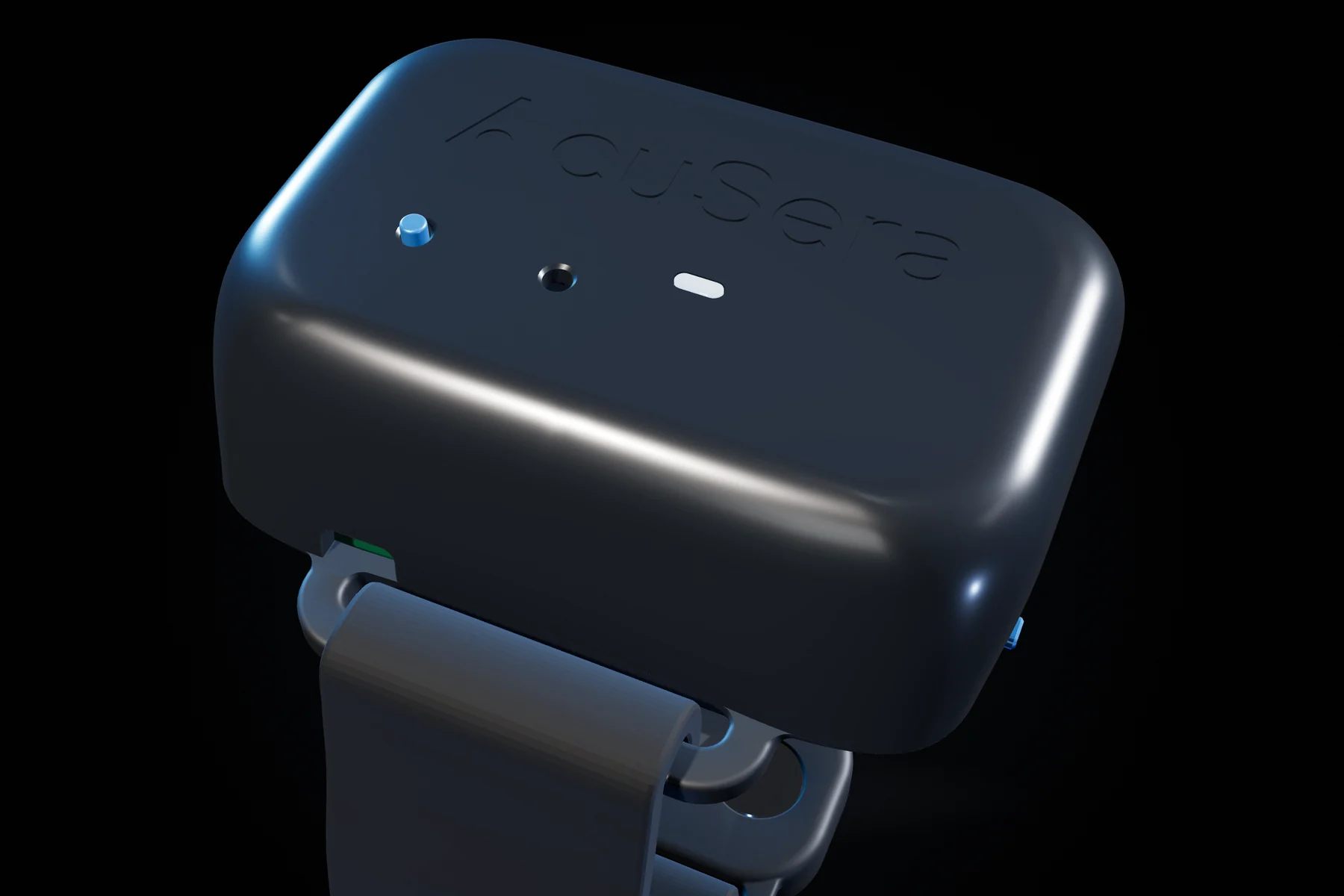
From stress to relief, automatically.
Four steps, all on your wrist, with nothing to open or tap. You keep doing what you were doing.
- 1 / Read
Sensing, all day
Your heart, your skin and your movement, read continuously while you wear it.
- 2 / Detect
Stress, not exercise
Our algorithms read every signal together, with motion as context, to spot stress as it builds.
- 3 / Respond
Vibration therapy at P6
The motor over the P6 acupoint starts a gentle vibration, on its own. Nothing to open, nothing to tap.
- 4 / Breathe
Breathe with the wave
At the same time, the vibration swells for 4 seconds and fades for 7. Breathe in as it rises, out as it falls.
Inside AcuSera
- Continuous sensingHeart rate, HRV, EDA, skin temperature and motion.
- Stress detection modelReads every signal together. More on detection.
- P6 vibration therapy with guided breathingOne vibration does both, at the same time.
Coming with the app
- Personal baselineAcuSera calibrates to your body.
- Learning over timeIt gets to know your patterns.
- Stress score and recoveryA daily score, and how fast you get back to baseline.
- Predicted stress windowsA heads-up before your usual time.
It learns your stress window.
Over a few weeks, the app finds when your stress tends to start and what was going on, then gives you a heads-up before tomorrow’s likely window.
App in development. Screen is illustrative.
What AcuSera measures.
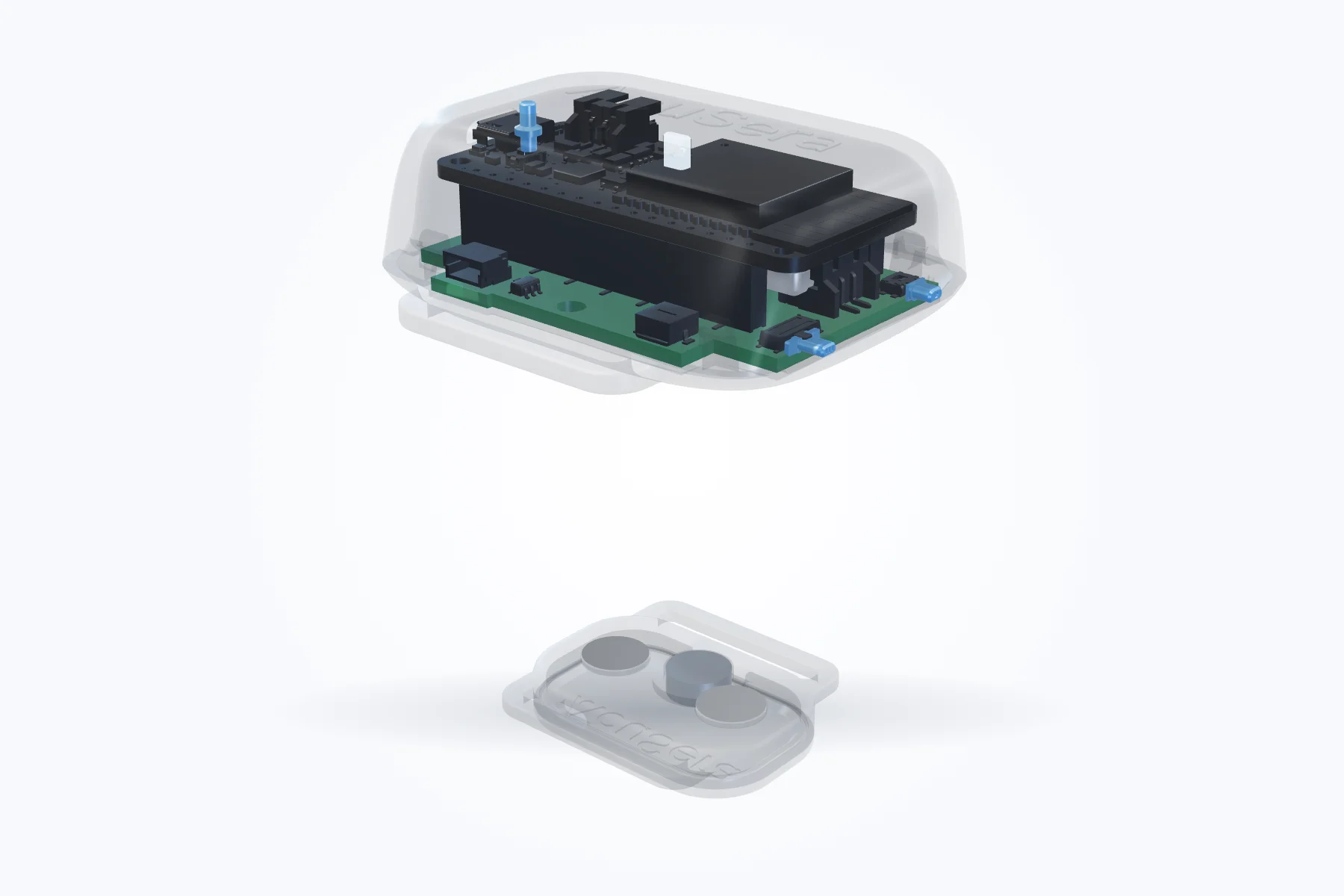
Four sensors on both sides of your wrist. Our algorithms turn their raw readings into a detailed, continuous picture of your stress.
| Signal | Sensor | Where | Why it’s there |
|---|---|---|---|
| Heart rate | Optical heart-rate sensor (PPG) | Main unit, skin side | Tends to rise with stress. It also rises with exercise, which is why it can’t work alone. |
| Heart rate variability | Same PPG sensor, beat-to-beat timing | Main unit, skin side | The spacing between beats tends to become more even under acute stress. |
| Electrodermal activity (EDA) | Two electrodes and a measurement circuit | P6 module, inner wrist | Your sweat response reacts to stress within seconds. Most wearables don’t measure it. The inner wrist reads it better than the back of the wrist. |
| Skin temperature | Infrared temperature sensor | Main unit, skin side | Shifts slowly as blood flow to the skin changes. |
| Motion | Motion sensor on the processor board | Main unit | Tells the model when you’re moving, so a workout isn’t read as stress. |
What each one does under stress: the science page.
The piece on your inner wrist.
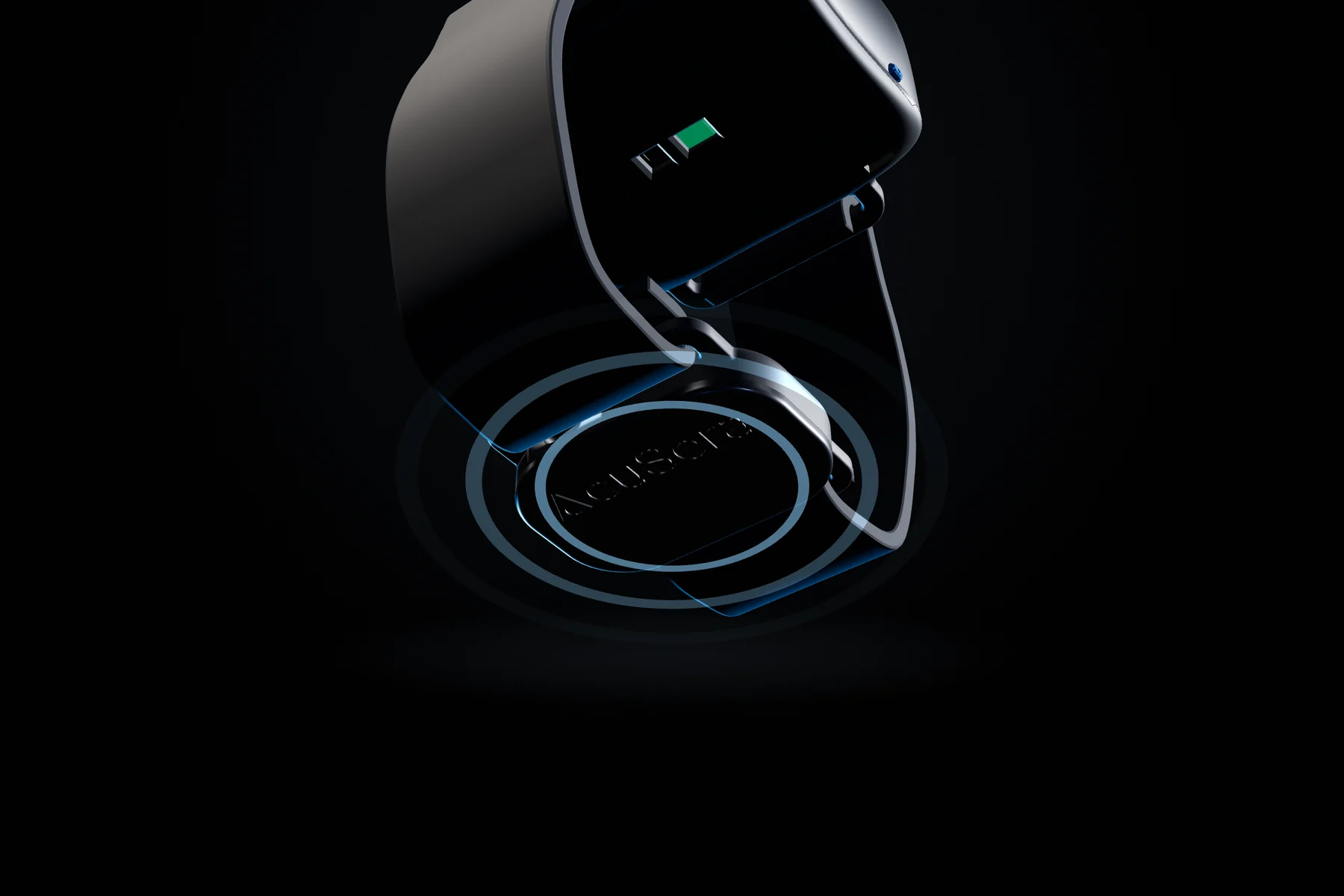
P6 is a point on the inner wrist, about three finger-widths up from the crease, between the two tendons. A vibration only does its job if it lands there, so the motor has to sit on the inside of your wrist, not on top.
The inside of the wrist is also the better spot for measuring EDA. So the two electrodes share the module with the motor, and a thin cable runs to the main unit.
P6 is one of the most studied acupoints in clinical research. AcuSera brings it a smarter trigger: vibration therapy that starts the moment your body shows stress building. More on P6.
Inside the V3 prototype.
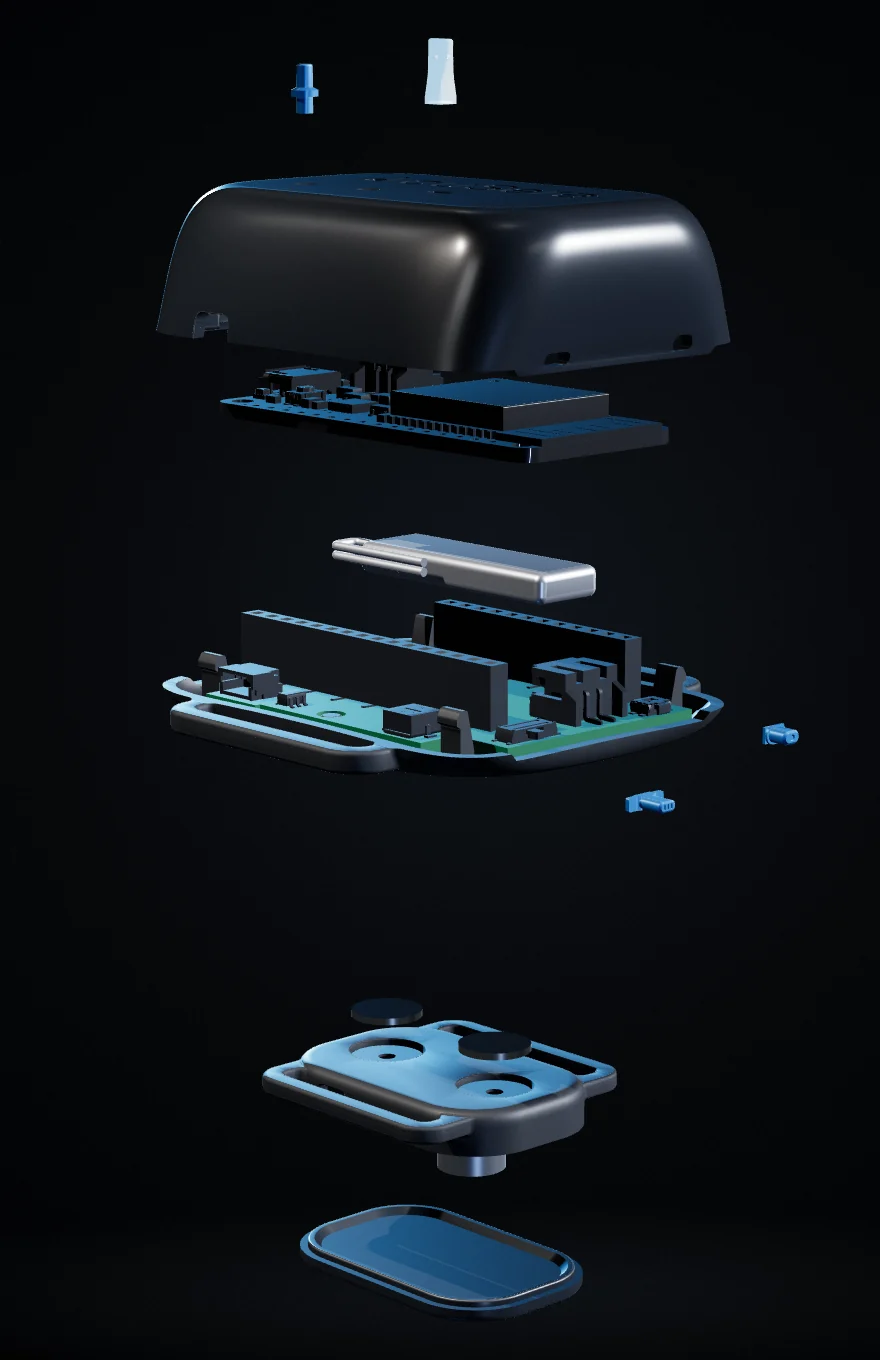
Every part of our working prototype, built around one job: notice stress and respond at your wrist. The AcuSera you’ll wear packs the same parts into a smaller design.
 1
2
3
4
5
6
7
8
Main unit, top of the wrist
- 1Status lightA light pipe that carries the board’s LED to the top of the case.
- 2ShellThe top half of the enclosure, with the side button and switch.
- 3Processor boardRuns the device and the Bluetooth radio. Its motion sensor reads movement.
- 4BatteryA small rechargeable cell between the two boards.
- 5AcuSera V3 boardThe heart-rate sensor and the skin-temperature sensor sit on its underside, facing your skin. It also carries the circuits that drive the motor and read EDA.
P6 module, inner wrist
- 6EDA electrodesTwo contacts that measure electrodermal activity: tiny changes in your skin’s sweat response.
- 7Vibration motorA small linear resonant actuator (LRA) that sits over the P6 point.
- 8LidCloses the module. A four-wire cable runs to the main unit.
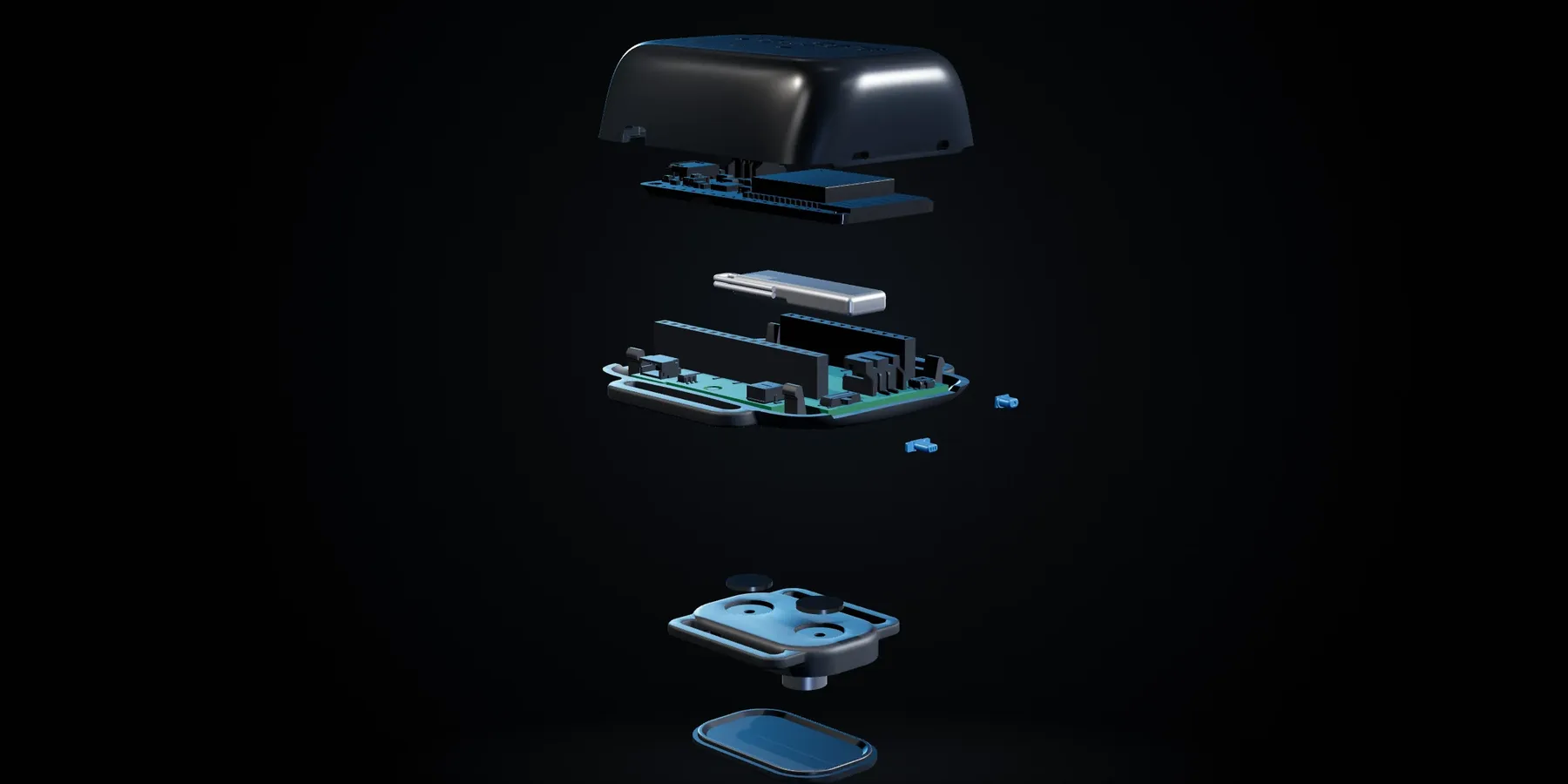 Explore V3 in 3D
Turn it, zoom in, and switch between Assembled, Exploded and X-ray views.
Wellness, not medicine.
AcuSera is a wellness wearable. It isn’t a medical device, it isn’t designed to diagnose, treat, or prevent any condition, and it doesn’t replace your doctor’s care.